
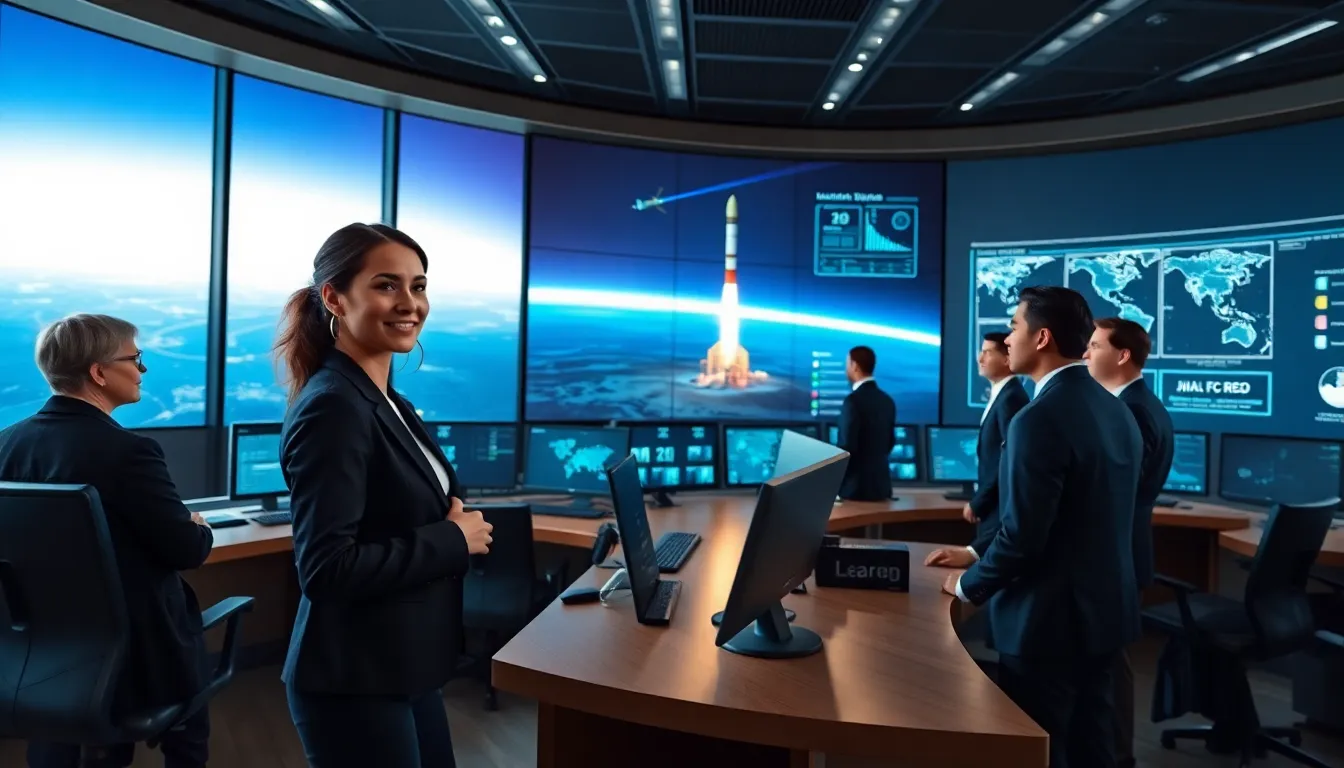
Space technology trends 2026 will reshape how humans explore, connect, and operate beyond Earth. The industry has moved past experimental phases into a new era of practical applications. Reusable rockets now launch weekly. Commercial space stations are under construction. Satellite networks promise internet access for billions of people who lack it today.
This year marks a turning point. Private companies and government agencies are racing to establish permanent infrastructure in orbit and beyond. The investments made over the past decade are finally producing results that affect everyday life on Earth. From faster global communications to new scientific discoveries, space technology trends 2026 will deliver tangible benefits.
Here’s what industry experts, mission planners, and engineers expect to see unfold.
Table of Contents
ToggleKey Takeaways
- Space technology trends 2026 mark a turning point as reusable rockets, commercial space stations, and satellite mega-constellations move from experimental phases into practical applications.
- Over 80% of orbital launches are expected to use reusable hardware by year’s end, dramatically reducing costs and accelerating progress across the space industry.
- Commercial space stations from Axiom Space, Vast Space, and Orbital Reef are preparing to replace the retiring ISS, enabling research, manufacturing, and tourism in orbit.
- Satellite mega-constellations like Starlink and Amazon’s Project Kuiper aim to bring reliable internet access to nearly 3 billion underserved people worldwide.
- AI and autonomous systems now enable spacecraft to make real-time decisions, predict equipment failures, and process millions of satellite images daily without human intervention.
- Lunar and Mars missions accelerate with NASA’s Artemis program, China’s crewed Moon landing preparations, and ongoing groundwork for future interplanetary travel.
Advancements in Reusable Rocket Technology
Reusable rocket technology will reach new milestones in 2026. SpaceX’s Starship program continues to push boundaries with full vehicle reusability. The company aims to achieve rapid turnaround times between launches, potentially just days instead of weeks.
Blue Origin’s New Glenn rocket enters regular service this year. Its first stage is designed for at least 25 reuses, which significantly cuts launch costs. Rocket Lab has also expanded its Electron recovery program and plans to introduce reusability features to its larger Neutron vehicle.
These space technology trends 2026 matter for one simple reason: cost. Each reuse saves millions of dollars. Lower costs mean more launches. More launches mean faster progress across every space sector.
China’s Long March 9 and 10 rockets are also incorporating reusable elements. The global competition drives innovation faster than any single company could achieve alone. Europe’s Ariane Group and Japan’s JAXA have announced their own reusability programs, though they trail behind American leaders.
By year’s end, experts predict that over 80% of orbital launches will use some form of reusable hardware. That’s a dramatic shift from just five years ago when reusability was still considered risky and unproven.
The Rise of Commercial Space Stations
The International Space Station has served humanity for over 25 years. Its retirement is scheduled for 2030, and replacements are already taking shape. Commercial space stations represent one of the most important space technology trends 2026 will showcase.
Axiom Space leads the pack. The company plans to attach its first commercial modules to the ISS before eventually detaching to form an independent station. Vast Space is developing Haven-1, a smaller station designed for both research and tourism. Orbital Reef, a joint venture between Blue Origin and Sierra Space, continues construction with ambitious timelines.
NASA has committed billions of dollars to support these private ventures. The agency wants to become a customer rather than an operator. This shift frees up resources for deep space exploration while maintaining American presence in low Earth orbit.
China’s Tiangong station expands with additional modules in 2026. The country has invited international partners to conduct experiments aboard, breaking what was once an exclusively American-Russian domain.
These stations will host scientific research, manufacturing experiments, and space tourists. Some companies plan to produce specialty pharmaceuticals and advanced materials in microgravity. Others see stations as waypoints for missions to the Moon and Mars.
Satellite Mega-Constellations and Global Connectivity
Satellite mega-constellations are changing how the world connects. Starlink operates over 6,000 satellites and plans to expand further. Amazon’s Project Kuiper launches its first operational satellites in 2026 after years of preparation.
These space technology trends 2026 address a real problem. Nearly 3 billion people lack reliable internet access. Traditional infrastructure can’t reach remote areas economically. Satellites can.
OneWeb, now owned by Eutelsat, competes directly with Starlink for government and enterprise customers. China’s Guowang constellation has begun deployment with plans for over 12,000 satellites.
The benefits extend beyond consumer internet. Airlines offer in-flight connectivity. Shipping companies track vessels in real time. Emergency responders maintain communications during disasters when ground networks fail.
But challenges remain. Space debris concerns grow as satellite numbers increase. The Federal Communications Commission and international bodies are developing stricter regulations for satellite operators. Companies must now file detailed plans for deorbiting satellites at end of life.
Astronomers have raised concerns about light pollution affecting ground-based observations. SpaceX and others have implemented darker satellite coatings, though the issue isn’t fully resolved.
Even though these challenges, mega-constellations will continue expanding. The economic incentives are too strong, and the demand is too great.
AI and Autonomous Systems in Space Exploration
Artificial intelligence transforms space operations in 2026. Spacecraft now make decisions without waiting for instructions from Earth. This autonomy is essential for deep space missions where communication delays can exceed 20 minutes each way.
NASA’s autonomous systems guide rovers on Mars. They identify interesting rock formations, avoid hazards, and select optimal paths without human input. The agency’s upcoming missions will rely even more heavily on AI-driven decision making.
Space technology trends 2026 include AI-powered satellite operations. Operators use machine learning to predict equipment failures before they happen. Satellites adjust their orbits automatically to avoid collisions with debris.
Private companies deploy AI for image analysis. Earth observation satellites capture millions of images daily. AI systems process this data to detect wildfires, track illegal fishing, and monitor crop health.
SpaceX uses autonomous flight termination systems on its rockets. These systems can detect anomalies and trigger safe destruction without human intervention. This capability enables launches from locations that would otherwise require extensive ground-based safety infrastructure.
The European Space Agency tests AI systems that allow spacecraft to dock autonomously. Future missions to the Moon and Mars will depend on these technologies for crew safety and mission success.
Lunar and Mars Mission Developments
Lunar missions accelerate in 2026. NASA’s Artemis program continues with crewed flights planned around the Moon. The agency’s commercial partners deliver payloads to the lunar surface through the CLPS program.
China advances its lunar exploration with sample return missions and preparations for a crewed landing before 2030. The country is building a lunar research station in partnership with Russia and other nations.
Space technology trends 2026 show growing private sector involvement on the Moon. Companies like Intuitive Machines and Astrobotic deliver scientific instruments and commercial payloads. ispace from Japan attempts additional landing missions after learning from earlier experiences.
Mars gets attention too. NASA’s Perseverance rover continues collecting samples for future return to Earth. The Mars Sample Return mission faces budget challenges but remains a priority for the planetary science community.
SpaceX maintains its long-term goal of crewed Mars missions. The company tests Starship configurations designed for interplanetary travel. While a human landing on Mars won’t happen in 2026, the groundwork continues.
The United Arab Emirates and India expand their Mars programs. Both countries plan follow-up missions after successful orbital insertions in previous years.
These developments point toward a future with permanent human presence beyond Earth. The technology being tested and deployed in 2026 will enable missions that seem impossible today.