Space technology shapes modern life in ways most people don’t realize. From GPS navigation to weather forecasts, satellites and spacecraft work behind the scenes every day. But how to space technology actually works, and how someone can get involved, remains a mystery to many.
This guide breaks down space technology into clear, digestible pieces. Readers will learn what space technology includes, how it functions, and where it shows up in daily life. Whether someone dreams of working at NASA or simply wants to understand rocket launches, this article provides a solid starting point.
Table of Contents
ToggleKey Takeaways
- Space technology includes rockets, satellites, space stations, rovers, and ground control systems that power exploration and daily conveniences like GPS and weather forecasting.
- Rockets overcome Earth’s gravity by reaching speeds of about 17,500 mph, using multi-stage designs that discard empty fuel tanks to improve efficiency.
- Over 10,000 satellites currently orbit Earth, enabling communication, navigation, weather tracking, and environmental monitoring.
- Understanding how space technology works starts with key physics principles including propulsion, radio wave communication, solar power generation, and thermal control.
- Breaking into the space technology field typically requires a STEM degree, with aerospace engineering, physics, and computer science being top choices.
- The commercial space industry offers growing career opportunities at companies like SpaceX, Blue Origin, and emerging startups beyond traditional aerospace organizations.
What Is Space Technology?
Space technology refers to any equipment, system, or method used for space exploration, observation, or communication. It includes rockets, satellites, space stations, and the ground systems that support them.
The definition stretches wider than most people assume. Space technology covers:
- Launch vehicles that carry payloads beyond Earth’s atmosphere
- Satellites that orbit Earth for communication, imaging, and research
- Spacecraft designed for human travel or robotic missions
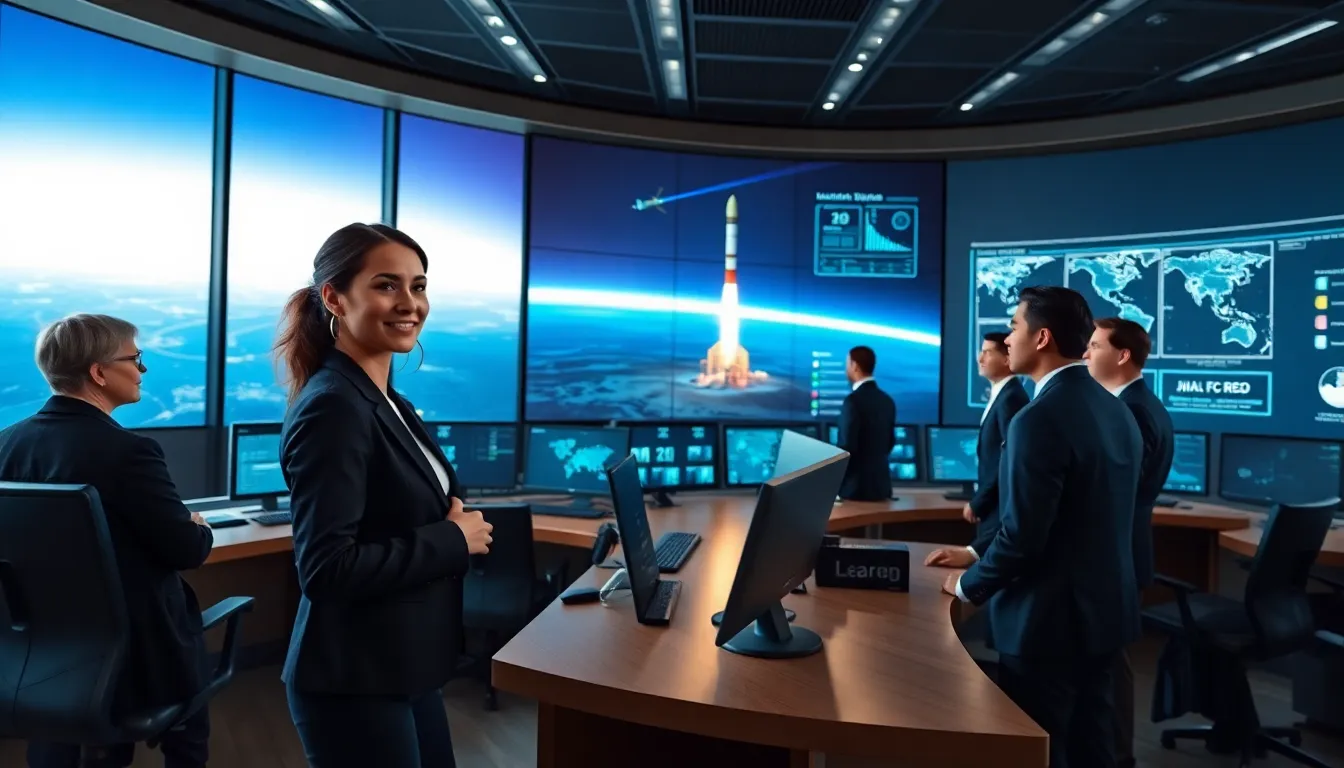
- Ground control systems that track and communicate with objects in space
- Space suits and life support systems for astronauts
Space technology began in earnest during the 1950s with the Soviet Union’s Sputnik satellite. Since then, governments and private companies have pushed boundaries further. Today, companies like SpaceX, Blue Origin, and Rocket Lab compete alongside national agencies.
Understanding how to space technology operates starts with recognizing its scope. It’s not just rockets, it’s an entire ecosystem of interconnected systems.
Key Types of Space Technology
Space technology falls into several categories. Each serves a distinct purpose in humanity’s push beyond Earth.
Rockets and Launch Vehicles
Rockets provide the thrust needed to escape Earth’s gravity. They burn fuel to create propulsion, carrying satellites, supplies, or humans into orbit. Modern rockets like SpaceX’s Falcon 9 can land and be reused, cutting costs dramatically.
Satellites
Satellites perform countless functions. Communication satellites relay phone calls and internet signals. Weather satellites track storms and predict climate patterns. GPS satellites tell drivers where to turn. Earth observation satellites monitor everything from crop health to military movements.
Over 10,000 satellites currently orbit Earth. That number grows each year as companies launch constellations for broadband internet.
Space Stations
The International Space Station (ISS) has hosted astronauts continuously since 2000. It serves as a laboratory for experiments that require microgravity. Private companies now build commercial space stations to replace the aging ISS.
Rovers and Probes
Robotic explorers like NASA’s Perseverance rover study distant planets and moons. Probes like Voyager 1 have traveled beyond our solar system, sending data from interstellar space.
Space Telescopes
Telescopes like the James Webb Space Telescope capture images impossible to obtain from Earth. They peer into distant galaxies and study exoplanets for signs of habitability.
How Space Technology Works
Space technology relies on fundamental physics principles. Understanding how to space technology functions starts with a few key concepts.
Overcoming Gravity
Reaching space requires velocity, about 17,500 miles per hour to achieve low Earth orbit. Rockets generate this speed by burning propellant and expelling exhaust gases downward. Newton’s third law does the rest: for every action, there’s an equal and opposite reaction.
Multi-stage rockets discard empty fuel tanks as they ascend. This reduces weight and improves efficiency. Once in orbit, an object keeps circling Earth without additional thrust because no air resistance slows it down.
Communication Systems
Satellites communicate using radio waves. Ground stations send signals up: satellites receive, process, and retransmit them. This enables everything from live TV broadcasts to real-time GPS tracking.
Deep space missions face a challenge: signal delay. Commands sent to a Mars rover take about 20 minutes to arrive. Spacecraft must operate autonomously for critical decisions.
Power Generation
Most spacecraft use solar panels to generate electricity. They convert sunlight into power for instruments, computers, and communication systems. Missions traveling far from the sun, like those to Jupiter or Saturn, use nuclear power sources called radioisotope thermoelectric generators.
Thermal Control
Space presents extreme temperature swings. Equipment facing the sun can reach 250°F while shaded areas drop to -250°F. Engineers design thermal blankets, radiators, and heaters to maintain safe operating temperatures.
Everyday Applications of Space Technology
Space technology impacts daily life more than most people realize. Many common conveniences trace back to innovations developed for space missions.
Navigation and GPS
Global Positioning System satellites enable turn-by-turn directions, ride-sharing apps, and package tracking. Farmers use GPS to plant crops with precision. Airlines rely on satellite navigation for safe flight paths.
Weather Forecasting
Meteorological satellites provide the data behind weather apps and forecasts. They track hurricanes, predict snowstorms, and monitor climate changes. Early warning systems save lives during severe weather events.
Telecommunications
Satellite TV, international phone calls, and rural internet access all depend on space technology. Companies like Starlink now offer broadband internet via satellite constellations, connecting remote areas worldwide.
Medical Advances
Space research has produced medical benefits including improved imaging techniques, water purification systems, and materials used in artificial limbs. Microgravity experiments help scientists study diseases and develop new treatments.
Environmental Monitoring
Satellites track deforestation, measure sea levels, and monitor pollution. This data informs policy decisions and helps scientists understand climate change. Space technology provides a global view impossible to achieve from the ground.
How to Get Started in the Space Technology Field
Breaking into space technology requires preparation, but multiple paths exist for motivated individuals. Here’s how to space technology careers become accessible.
Educational Foundations
Most space technology careers require STEM degrees. Aerospace engineering, mechanical engineering, physics, and computer science top the list. Some roles need advanced degrees, while technician positions may require only associate degrees or certifications.
Students should seek internships early. NASA, SpaceX, and other organizations offer programs for undergraduates. These experiences provide hands-on learning and industry connections.
Career Paths
Space technology offers diverse roles:
- Engineers design rockets, satellites, and spacecraft systems
- Scientists conduct research using space-based instruments
- Technicians build and test hardware
- Software developers create mission control systems and flight software
- Operations specialists monitor spacecraft and plan missions
Growing Private Sector
The commercial space industry has exploded in recent years. Companies need talent for everything from manufacturing to marketing. Job seekers shouldn’t limit searches to traditional aerospace giants, startups offer exciting opportunities too.
Self-Education Resources
Online courses from MIT, Stanford, and other institutions cover space technology fundamentals. Organizations like The Planetary Society offer educational materials. Building model rockets or participating in amateur radio satellite projects provides practical experience.