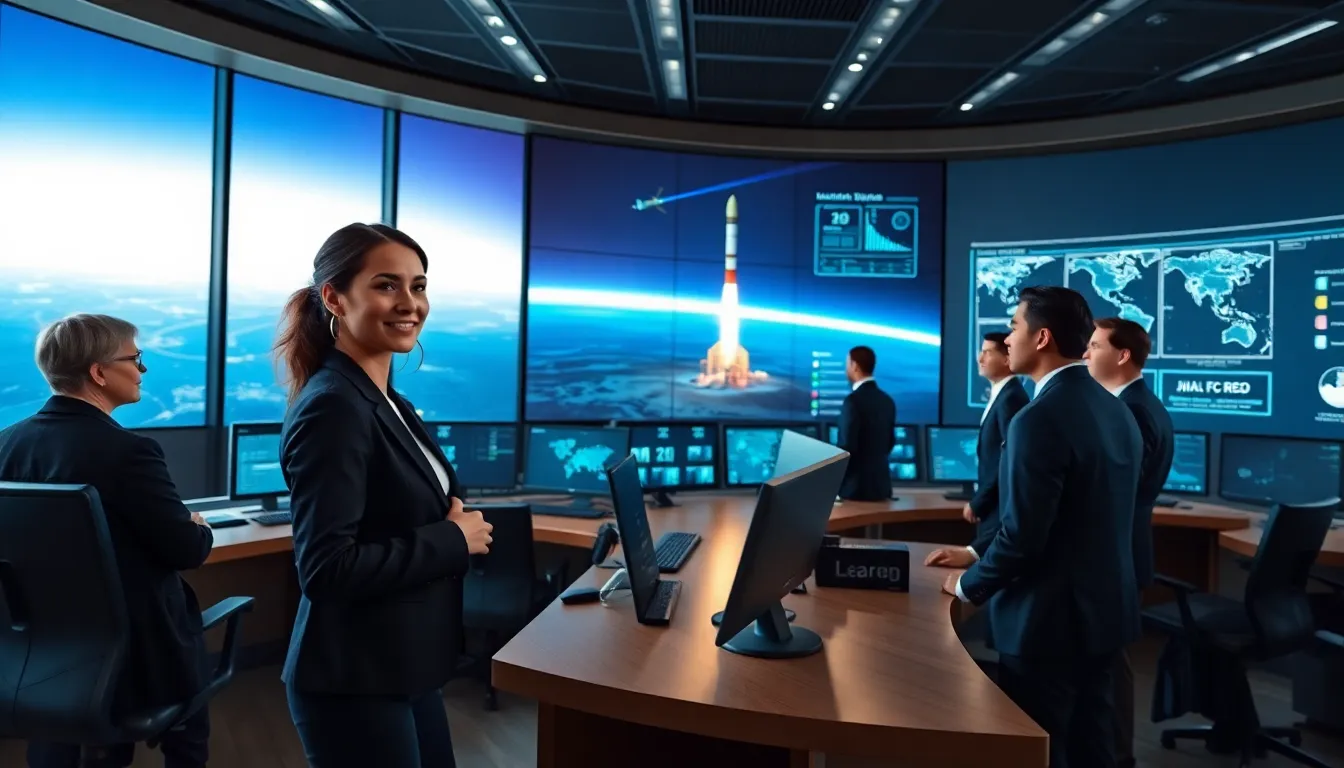
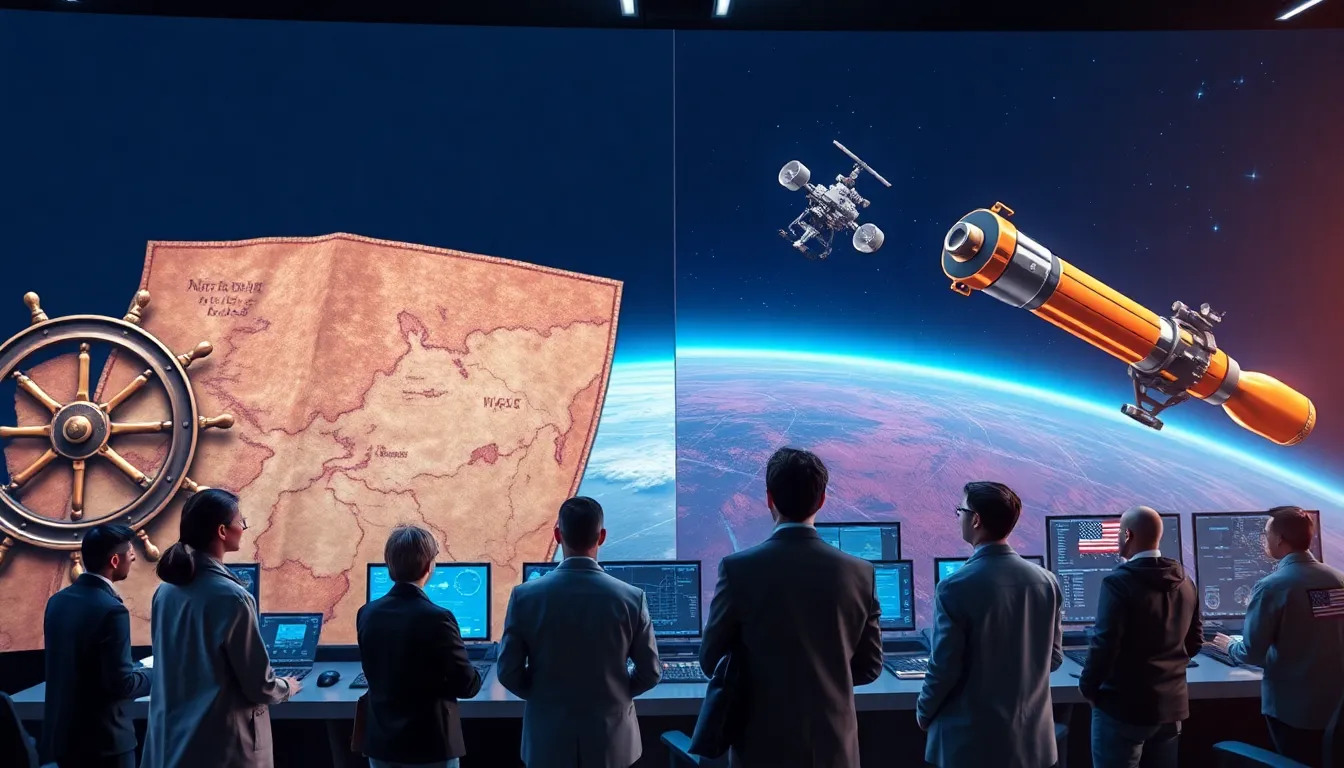
Space technology vs. traditional exploration represents one of the most significant shifts in how humans understand the universe. For centuries, explorers relied on ships, compasses, and physical journeys to map unknown territories. Today, satellites, rovers, and AI-powered systems gather data from millions of miles away without a single human footprint.
This comparison matters because the tools we use shape what we can discover. Traditional methods gave us direct experience but came with extreme limitations. Modern space technology removes many of those barriers while introducing new possibilities and challenges. Understanding these differences helps clarify where exploration is headed, and what it means for science, industry, and everyday life.
Table of Contents
ToggleKey Takeaways
- Space technology vs. traditional exploration highlights a dramatic shift from physical human journeys to satellite, rover, and AI-powered systems that gather data across millions of miles.
- Modern innovations like reusable rockets and CubeSats have slashed launch costs from $54,500 to under $3,000 per kilogram, making space more accessible to universities, startups, and developing nations.
- Robotic missions remove human limitations—rovers operate for years without rest, food, or oxygen while continuously collecting and transmitting scientific data.
- Space technology accelerates discovery, with instruments like the James Webb Telescope capturing images of galaxies over 13 billion years old that no human could ever reach.
- The future combines both approaches: robots will scout dangerous environments first, while humans follow once conditions are better understood.
- International cooperation through agreements like the Artemis Accords will shape how quickly lunar bases, Mars missions, and asteroid resource extraction become reality.
Defining Modern Space Technology
Modern space technology includes the hardware, software, and systems that enable exploration beyond Earth’s atmosphere. This category covers satellites, rockets, space stations, rovers, telescopes, and the communication networks that connect them all.
The James Webb Space Telescope, launched in December 2021, demonstrates what current space technology can achieve. It captures infrared images of galaxies formed over 13 billion years ago. No human could travel that distance, yet the technology brings that data directly to scientists on Earth.
Rockets have also advanced significantly. SpaceX’s reusable Falcon 9 rockets have completed over 300 successful launches as of 2024. Reusability reduces costs and increases launch frequency, making space more accessible than ever before.
Space technology also includes smaller innovations. CubeSats, satellites about the size of a shoebox, now perform tasks that once required much larger, more expensive equipment. Universities and startups can deploy these satellites for research, weather monitoring, and communication purposes.
Artificial intelligence plays a growing role too. NASA’s Perseverance rover uses AI to autonomously select rock samples on Mars. This reduces the delay caused by sending commands across millions of miles and waiting for responses.
Traditional Exploration Methods and Their Limitations
Traditional exploration relied on human presence. Explorers traveled to locations, observed conditions firsthand, and brought samples back. This approach produced valuable discoveries but carried major constraints.
Physical danger was constant. Early Antarctic expeditions lost crew members to freezing temperatures and supply shortages. Ocean explorers faced storms, disease, and navigation errors. The risks increased with distance and isolation.
Time presented another barrier. A voyage to chart new coastlines could take years. Collecting data required being present at the location, which limited how much ground any single expedition could cover.
Equipment was also primitive by today’s standards. Early telescopes could only see a fraction of what modern instruments detect. Measuring tools lacked precision. Recording data meant handwritten notes and drawings rather than digital files that could be analyzed by computers.
Space technology vs. traditional exploration shows these gaps clearly. A Mars rover can operate for years without rest, collect samples continuously, and transmit findings in near real-time. Human explorers would need food, water, oxygen, and protection from radiation, resources that add enormous weight and cost to any mission.
Traditional methods still hold value for certain purposes. Human judgment and adaptability remain unmatched in unpredictable situations. But for reaching extreme environments like other planets, traditional exploration simply cannot compete.
How Space Technology Transforms Scientific Discovery
Space technology accelerates discovery by removing physical and temporal barriers. Scientists can now study phenomena that were previously impossible to observe directly.
The Hubble Space Telescope has contributed to over 19,000 peer-reviewed papers since its 1990 launch. It helped confirm the accelerating expansion of the universe and provided evidence for supermassive black holes at galaxy centers. These findings reshaped fundamental physics.
Planetary science has advanced rapidly through robotic missions. The Curiosity rover found evidence that Mars once had conditions suitable for microbial life. The Cassini spacecraft discovered ocean worlds beneath the icy surfaces of Saturn’s moons. Each mission answered old questions and raised new ones.
Space technology also benefits Earth-based science. GPS satellites enable precise geological surveys. Weather satellites improve storm prediction accuracy, saving lives and reducing property damage. Remote sensing detects deforestation, monitors crop health, and tracks climate change indicators.
The speed of data collection has transformed research timelines. Where traditional expeditions might gather a few hundred samples over months, automated systems collect millions of data points continuously. Machine learning algorithms process this information faster than human teams ever could.
Space technology vs. traditional exploration is not just about destination, it’s about capability. Technology multiplies what researchers can accomplish with limited budgets and personnel.
Cost and Accessibility Comparisons
Cost has historically been the biggest barrier to space exploration. Early missions required massive government budgets. The Apollo program cost approximately $280 billion in today’s dollars. Only wealthy nations could participate.
Space technology has changed this equation. Launch costs have dropped dramatically. In 2010, sending one kilogram to low Earth orbit cost around $54,500. By 2024, SpaceX reduced that figure to under $3,000 per kilogram on Falcon 9 launches.
This cost reduction opens doors for smaller organizations. Universities now launch research satellites. Private companies deploy communication networks. Developing nations operate their own space programs. India’s Chandrayaan-3 mission successfully landed on the Moon’s south pole in 2023 for approximately $75 million, far less than comparable Western missions.
Traditional exploration costs remain high because humans require support systems. A crewed Mars mission would need life support, food supplies, radiation shielding, and emergency contingencies. Current estimates place such a mission at $100 billion or more.
Space technology vs. traditional exploration shows clear cost advantages for robotic and automated approaches. Rovers don’t need food. Satellites don’t get tired. Telescopes can operate for decades with proper maintenance.
Accessibility extends beyond money. Space technology delivers data to anyone with internet access. Satellite imagery, scientific papers, and mission updates reach global audiences instantly. Traditional exploration kept knowledge within small circles of experts and sponsors.
The Future of Space Technology in Exploration
The next decade will bring significant advances in space technology capabilities. Several developments are already underway.
NASA’s Artemis program aims to return humans to the Moon by 2026, with plans for a permanent lunar base. This base would serve as a testing ground for technologies needed for Mars missions. Space technology will support human explorers rather than replace them entirely.
Private companies are pushing boundaries independently. SpaceX continues developing Starship, designed to carry 100 passengers to Mars. Blue Origin plans orbital habitats for manufacturing and research. These efforts expand what’s possible beyond government-led initiatives.
Artificial intelligence will play a larger role in autonomous exploration. Future probes may make real-time decisions about where to go and what to study without waiting for Earth-based instructions. This capability becomes essential for missions to distant targets where communication delays last hours.
Space technology vs. traditional exploration will likely find a middle ground. Robots will scout dangerous environments first. Humans will follow when conditions are better understood. The combination leverages the strengths of both approaches.
Resource extraction from asteroids and the Moon could become economically viable. Water ice on the Moon can produce rocket fuel. Asteroids contain rare metals worth trillions of dollars. Space technology makes accessing these resources increasingly practical.
International cooperation will shape how quickly these advances happen. The Artemis Accords, signed by over 40 countries as of 2024, establish guidelines for peaceful space exploration. Shared standards and open data benefit everyone.